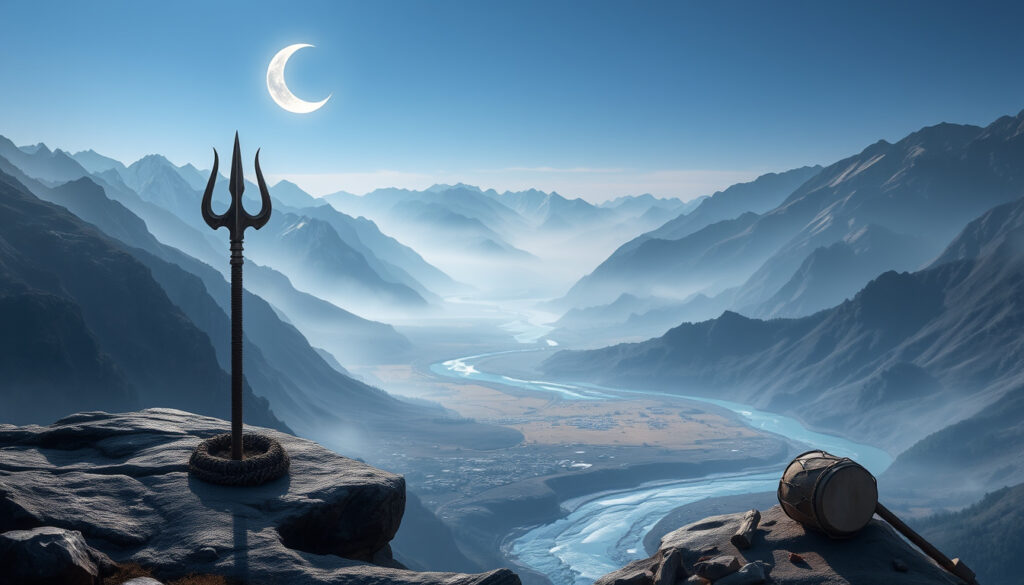
Shiva God: Role, Names, Beliefs, and Key Facts
Shiva is one of the most paradoxical figures in world religion – he is the destroyer who also creates, the meditating ascetic who is also a loving husband. For millions of Shaivites, he is the supreme reality. According to the Encyclopaedia Britannica (authoritative reference work), Shiva is a principal deity of Hinduism, wielding the power to dissolve the universe so it can be reborn. By understanding his roles, names, and symbols, you get a window into one of the oldest living traditions.
Principal deity in Shaivism: Yes ·
Number of major names: 12 ·
Consort: Parvati ·
Vehicle: Nandi bull ·
Abode: Mount Kailash
Quick snapshot
- Shiva is a principal deity of Hinduism (Encyclopaedia Britannica)
- Shaivites worship Shiva as the supreme being (Encyclopaedia Britannica)
- Shiva is the destroyer within the Trimurti (Encyclopaedia Britannica)
- His consort is Parvati (Encyclopaedia Britannica)
- The exact origin of Shiva worship is debated – some scholars suggest pre-Vedic roots (Wikipedia)
- Some link the earliest forms to the Indus Valley civilization and the “Pashupati” seal (Encyclopaedia Britannica)
- The 108-name list varies between traditions (Isha Foundation)
- Shiva worship dates back at least 3,000 years and continues today as a living tradition (Encyclopaedia Britannica)
- Global interest in Shiva is rising through yoga, meditation, and Hindu diaspora (Wikipedia)
Six core attributes from the Encyclopaedia Britannica (authoritative reference work) and the Isha Foundation (spiritual organization) capture Shiva’s essence:
| Attribute | Detail |
|---|---|
| Full name | Shiva |
| Also known as | Mahadeva, Shankara, Rudra |
| Consort | Parvati (Shakti) |
| Vehicle | Nandi (bull) |
| Weapon | Trishula (trident) |
| Symbol | Lingam |
What is Shiva the god for?
What are 5 facts about Shiva?
- Principal deity: Shiva is one of the three main gods of Hinduism, part of the Trimurti alongside Brahma and Vishnu (Encyclopaedia Britannica).
- Destroyer and transformer: His role is to dissolve the universe so it can be recreated – destruction that enables rebirth (Encyclopaedia Britannica).
- Supreme in Shaivism: For Shaivites, Shiva is the supreme being who performs creation, preservation, and dissolution (Encyclopaedia Britannica).
- Mount Kailash abode: He is said to reside on Mount Kailash in the Himalayas, where he meditates (Wikipedia).
- Iconic appearance: He is depicted with a third eye, a crescent moon on his head, a trident, and a serpent around his neck (Encyclopaedia Britannica).
Shiva is both the ultimate ascetic, covered in ash and meditating on a mountain, and the householder married to Parvati with two sons. For devotees, this duality is the point: he models that spiritual liberation is possible within the world.
What is Shiva’s gender?
Shiva is typically referred to as male, but his nature transcends binary categories. The Encyclopaedia Britannica (reference work) notes that he is often depicted as androgynous in the form of Ardhanarishvara, where the left half is female (Parvati) and the right half is male. This symbolizes the union of Shiva and Shakti, the masculine and feminine principles.
The implication: Shiva’s gender is a theological statement about the inseparability of consciousness and energy – not a biological classification.
Do Hindus believe in Shiva?
How is Shiva worshipped?
Hindus generally believe in a supreme being, but practices vary widely. For followers of Shaivism, Shiva is that supreme being. According to the Encyclopaedia Britannica, Shaivites worship Shiva in temples and at home shrines, often through the lingam – an aniconic symbol representing his formless aspect. Major festivals include Maha Shivaratri, a night of vigil and fasting.
Other Hindu traditions, such as Vaishnavism and Shaktism, revere Shiva as a great god but not as the ultimate. The Wikipedia entry (community encyclopedia) explains that the Puranas present different hierarchies, with Shiva sometimes subordinate to Vishnu and vice versa. But in Shaiva scripture, Shiva is the source of all.
The diversity of belief means that a single “Hindu view” of Shiva does not exist. For a Western reader looking to understand the tradition, the most reliable sources are academic works and trusted spiritual teachers – not random forums.
The pattern: Shiva’s worship is shaped by the sect of the devotee. Shaivites build their entire practice around him; others honor him as part of a larger pantheon.
What are the 12 names of Shiva?
What is Shiva’s most powerful name?
Shiva has 12 primary names – the Dwadasha Jyotirlinga names – each associated with a sacred site across India. The Encyclopaedia Britannica lists many epithets: Shambhu (Benign), Shankara (Beneficent), Mahesha (Great Lord), Mahadeva (Great God), Parameshvara (Supreme Lord), and Rudra (Howler). The tradition also includes 108 names and 1,000 names in the Shri Rudram.
The Isha Foundation (spiritual organization) provides a list of 108 names with meanings, including Adiyogi (the first Yogi), Bholenath (the simple one), and Gangadhara (Lord of the river Ganga). Each name reveals a different facet of his nature.
As for the most powerful name: many scholars and practitioners point to “Mahadeva” or the mantra “Om Namah Shivaya” as the most potent (Isha Foundation).
Are Kali and Shiva the same?
What are the 5 types of Shiva?
Kali is a form of the goddess Parvati, who is Shiva’s consort and Shakti (divine energy). She is distinct from Shiva but intimately connected. The Wikipedia entry (community encyclopedia) describes Kali as the fierce aspect of the goddess, often depicted standing on a prostrate Shiva. This iconography symbolizes the union of energy (Kali) with the absolute consciousness (Shiva).
The five types of Shiva – Sadyojata, Vamadeva, Aghora, Tatpurusha, and Ishana – represent his five aspects, according to the Shaiva Agamas (Wikipedia). These correspond to creation, preservation, dissolution, concealing grace, and revealing grace.
Why this matters: Kali and Shiva are not the same deity, but their relationship illustrates a core theological principle – that the ultimate reality has both a male and female pole, and neither is complete without the other.
Who is Shiva’s wife?
Shiva’s wife is Parvati, also known as Shakti. In some traditions her fierce form is Kali, and in others she is Uma or Durga (Encyclopaedia Britannica).
The trade-off: While popular culture often simplifies their marriage into a cosmic romance, the theological weight is that Shiva and Parvati represent the inseparable union of consciousness and creative energy.
Comparison: Shiva vs Kali
One pattern emerges from the myths: Shiva and Kali are complementary forces, not opponents. Here is a side-by-side look:
| Aspect | Shiva | Kali |
|---|---|---|
| Role | Destroyer and transformer of the universe | Fierce form of the goddess, destroyer of demons |
| Gender | Primarily male (with androgynous aspect) | Female |
| Relationship | Supreme being in Shaivism | Manifestation of Parvati, his consort |
| Iconography | Third eye, trident, crescent moon | Dark skin, sword, severed arms, standing on Shiva |
| Symbolism | Consciousness, dissolution | Time, energy, destruction of ego |
Sources: Encyclopaedia Britannica, Wikipedia, Wikipedia.
Who is Shiva’s biggest enemy?
How did Lord Shiva die?
Who is the top 5 strongest god?
In Hindu mythology, Shiva’s greatest adversaries include the demon Jalandhara, the triple city of Tripurasura, and the demon Andhaka. The Wikipedia article (community encyclopedia) notes that these battles allegorically represent the triumph of consciousness over ego and illusion.
As for Shiva’s death: he is considered eternal and undying. Stories of his death are allegorical. In one famous tale, he consumes poison and holds it in his throat – turning it blue – to save the universe, but he does not die (Encyclopaedia Britannica).
The catch: When people ask about the “strongest god,” rank lists are subjective. In the Shaiva tradition, Shiva is the ultimate. In Vaishnavism, Vishnu is supreme. The Encyclopaedia Britannica makes clear that hierarchies vary by region and text.
Clarity check: What we know and what remains uncertain
Confirmed facts
- Shiva is a principal deity in Hinduism (Encyclopaedia Britannica)
- He is the destroyer within the Trimurti (Encyclopaedia Britannica)
- Shaivites worship him as supreme (Encyclopaedia Britannica)
- His consort is Parvati (Encyclopaedia Britannica)
- His abode is Mount Kailash (Wikipedia)
- He is depicted with a third eye and trident (Encyclopaedia Britannica)
- 108 and 1,000 name lists are part of the tradition (Isha Foundation)
- Maha Shivaratri is a major festival (Encyclopaedia Britannica)
- Kali is a form of Parvati, closely associated with Shiva (Wikipedia)
- Shiva is considered immortal in scripture (Encyclopaedia Britannica)
What’s unclear
- The exact origin of Shiva worship is debated; some suggest pre-Vedic roots, others link to the Indus Valley (Wikipedia)
- The identity of the “Pashupati” seal with Shiva is not universally accepted (Encyclopaedia Britannica)
- Specific name lists vary across texts and regions (Isha Foundation)
- The precise number of principal names (12, 108, 1,000) depends on tradition (Encyclopaedia Britannica)
- Whether Shiva was originally a Vedic god (Rudra) or a separate deity is a scholarly question (Wikipedia)
- The timeline of when Shaivism emerged as a distinct sect is uncertain (Wikipedia)
Quotes from authoritative sources
“Shiva, (Sanskrit: ‘Auspicious One’) one of the main deities of Hinduism…his roles are complex, as he is the god of destruction as well as the ascetic god and the god of reproduction.”
– Encyclopaedia Britannica (authoritative reference work)
“Shiva is known as the destroyer, but in Shaivism he is also the creator and preserver. He is often depicted in meditation on Mount Kailash, representing the union of austerity and bliss.”
– Wikipedia (community encyclopedia)
Summary: The enduring power of Shiva
Shiva is far more than a mythic figure – he is a living presence for hundreds of millions. His paradoxical nature – destroyer and creator, ascetic and householder – offers a model for holding opposites together. For a devotee searching for meaning in a chaotic world, the implication is clear: embrace the dissolution of the ego, and let Shiva’s third eye burn away illusion, or remain trapped in the cycles of attachment.
Related reading: Facts About Everything: 30+ Verified Amazing & Weird Trivia
facebook.com, templepurohit.com, triptotemples.com, facebook.com
For a deeper look at Shivas role as destroyer and transformer, this guide explores his mythology and significance in Hinduism.
Frequently asked questions
What is the meaning of Shiva’s third eye?
The third eye represents higher consciousness and the ability to see beyond duality. When opened, it burns away ignorance and illusion (Encyclopaedia Britannica).
Why is Shiva called the destroyer?
He is the destroyer of the universe so it can be recreated. This destruction is not negative – it is a necessary part of the cosmic cycle (Encyclopaedia Britannica).
How is Shiva worshipped in daily life?
Through chanting the mantra “Om Namah Shivaya,” offering water and bilva leaves to the lingam, fasting on Mondays, and observing Maha Shivaratri (Wikipedia).
What are Shiva’s primary symbols?
The lingam (formless representation), the trident (Trishula), the crescent moon, the third eye, the serpent Vasuki, and the bull Nandi (Encyclopaedia Britannica).
Is Shiva a male or female god?
Shiva is depicted as male, but the Ardhanarishvara form combines Shiva and Parvati in one body – half male, half female – representing the unity of opposites (Encyclopaedia Britannica).
What is the story of Shiva and the demon Tripurasura?
Shiva destroyed the three flying cities (Tripura) of the demon Tripurasura with a single arrow, symbolizing the destruction of the three forms of ego (Wikipedia).
How does Shiva relate to the goddess Shakti?
Shiva and Shakti are inseparable: Shiva is pure consciousness, and Shakti is his dynamic energy. Without Shakti, Shiva is inert; without Shiva, Shakti has no source (Encyclopaedia Britannica).
More related posts
 Michael Clarke 2025: Life After Cricket, Net Worth & Family
 Box Office Mojo – Reliable Guide to Film Revenue Data
 Anthony Seibold sacked, biography and new Collingwood role
 Nike Air Max 97 Review: Comfort, Style & Worth in 2025
 Man United vs Athletic Club: Europa League Semifinal Result
 Dakota Johnson: Age, Height, and Chris Martin Relationship
 Ethan Slater: Ariana Grande Relationship, Career & Biography
 Mark Butler: Minister for Health & Aged Care, Biography
