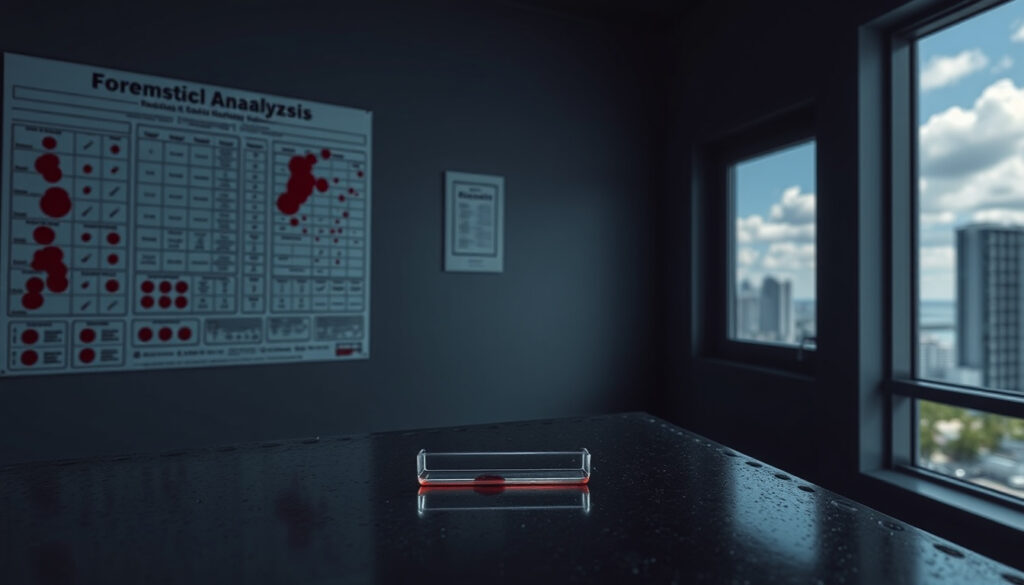
Dexter Morgan: Fictional Serial Killer & Real-Life Inspiration
It’s a strange feeling, rooting for a serial killer every Sunday night—and yet, that’s exactly what millions of viewers did for eight seasons. Dexter Morgan, the blood spatter analyst with a dark hobby, sits at an odd crossroads: a character so well-drawn that some fans wonder if he’s based on a real person, while mental health experts have debated his psychological profile for years.
First appearance: 2004 novel “Darkly Dreaming Dexter” ·
TV series run: 2006–2013 (8 seasons) ·
Portrayed by: Michael C. Hall ·
Notable alias: Bay Harbor Butcher ·
Occupation: Blood spatter analyst, Miami Metro Police ·
Known victims: Other murderers (fictional)
Quick snapshot
- Dexter Morgan is a fictional character created by Jeff Lindsay (National Institutes of Health (academic journal))
- His moral code restricts him to killing murderers who escaped justice (Psychology Today (psychology publication))
- He was portrayed by actor Michael C. Hall for eight seasons (Showtime) (National Institutes of Health (academic journal))
- No official IQ number is given in the show canon
- Whether his social awkwardness aligns with autism is not confirmed
- Exact degree of real-life killer influence is debated among sources
- 2004: First novel “Darkly Dreaming Dexter” published
- 2006–2013: Original TV series airs on Showtime
- 2021–2022: Revival series “Dexter: New Blood” airs
- Spinoff series “Dexter: Original Sin” in development
- Ongoing academic interest in psychopathy portrayal in media
- Continued true crime comparisons in popular culture
Five core facts define the character’s identity, as summarized in the table below.
| Attribute | Value |
|---|---|
| Full Name | Dexter Samuel Morgan (né Moser) |
| Occupation | Blood spatter analyst, Miami Metro PD |
| Alias | Bay Harbor Butcher |
| Portrayed By | Michael C. Hall |
| Created By | Jeff Lindsay |
| TV Series Run | 2006–2013 (8 seasons) |
| Revival | 2021–2022 (“Dexter: New Blood”) |
Is Dexter Morgan Based on a True Story?
Dexter Morgan may feel real enough to print a wanted poster, but every major source confirms he’s a work of fiction—with real DNA borrowed from multiple actual murderers.
The Fictional Origin of Dexter Morgan
- Dexter Morgan was created by author Jeff Lindsay in his 2004 novel Darkly Dreaming Dexter, a purely fictional work (National Institutes of Health (academic journal)).
- The television adaptation on Showtime expanded the character across eight seasons and a revival series, but the core remains fictional.
- No single real person is Dexter Morgan, despite persistent rumors to the contrary.
Real-Life Killers That Inspired the Character
- Author Jeff Lindsay has acknowledged drawing inspiration from Ed Gein, the notorious body-snatcher and murderer who also influenced classic horror characters like Norman Bates (Psychology Today (psychology publication)).
- According to Oxygen (true crime network), Brazilian serial killer Pedro Rodrigues Filho—who targeted other criminals—influenced the creation of Dexter Morgan’s vigilante premise. Filho also murdered murderers.
- The Trinity Killer character (seasons 3–4) was directly based on Dennis Rader, the BTK killer, as reported by Oxygen (true crime network).
- In 2012, Canadian Mark Twitchell set up a kill room with plastic sheeting similar to Dexter’s and was convicted of murder; investigators noted his obsession with the character (CBS News (major news outlet)).
The implication: Dexter Morgan is a composite of several real killers’ behaviors, but the character himself exists only in fiction.
Is Dexter Morgan Good or Bad?
The show’s entire emotional hook relies on making viewers root for a killer—a cognitive dissonance that only works if Dexter follows a recognizable moral framework.
Moral Ambiguity of the Character
- Dexter is classified as an antihero, not a straightforward villain. Psychology Today (psychology publication) describes his killing style as “mission-oriented,” meaning he believes he is making the world better by eliminating certain people.
- He follows a strict outline known as Harry’s Code, taught by his adoptive father Harry Morgan, a police officer. The code demands that he only kill people who are murderers themselves and who have escaped the legal system.
- He is portrayed as someone caught between a violent compulsion and a genuine (if limited) desire to protect innocent people.
The Vigilante Code: Only Killing Murderers
- The code is presented in the show as a way to channel an underlying compulsion toward killing those who “deserve it,” according to Psychology Today.
- Dexter uses his position at Miami Metro to identify victims who match his code, ensuring he never kills an innocent.
- The tension of the series—and its moral justification—lies in whether the ends (removing dangerous killers) justify the means (extrajudicial execution by a serial killer).
The catch: The code is a narrative device that makes the audience complicit. Without it, Dexter is simply a predator. With it, he becomes a dark reflection of the justice system’s failures.
Is Dexter Morgan a Psychopath or Autistic?
Psychopathic Traits in Dexter Morgan
- An academic article from the National Institutes of Health discusses Dexter Morgan as a textbook example of a psychopath in its analysis of the character’s portrayal.
- He exhibits classic traits: lack of empathy, manipulative behavior, shallow emotional range, and a calculating approach to relationships.
- Forensic psychologist Kevin Dutton, speaking to Screen Rant (entertainment news outlet), noted that Dexter’s charm and ability to lie and conceal are accurate traits associated with real serial killers such as Ted Bundy.
Autism Spectrum Representation Discussion
- Dexter was not diagnosed with autism in the show. His social awkwardness and difficulty reading social cues are presented as part of his psychopathy, not a separate condition.
- Fans have debated whether his flat affect, obsessive routines, and single-minded focus resemble autism spectrum traits, but the canon does not support that interpretation.
- Dutton observed that most psychopaths are unlikely to engage in the same degree of self-analysis that Dexter performs in voiceover, making him a more complex case than a pure psychopath archetype (Screen Rant).
The pattern: Dexter acts like a psychopath in his behavior toward victims, but his internal monologue and self-awareness break the mold—making him a composite portrait rather than a clinical diagnosis.
What Is Dexter Morgan’s IQ Level?
Dexter’s Intelligence in the Series
- Dexter is consistently depicted as highly intelligent and exceptionally observant. His ability to analyze crime scenes and reconstruct events showcases advanced analytical thinking.
- No official IQ number is given in any episode or novel in the Dexter canon.
- His expertise in blood spatter analysis—a field requiring strong spatial reasoning, mathematics, and pattern recognition—indicates advanced cognitive ability.
High IQ and Crime Solving Skills
- Dutton noted that Dexter’s intelligence is not always typical of psychopaths, many of whom are impulsive and struggle with long-term planning (Screen Rant).
- Dexter’s ability to plan elaborate kills, evade detection for years, and maintain a double life suggests high cognitive function, though the show leaves the exact number unspecified.
The trade-off: The absence of a confirmed IQ means fans must rely on observable behavior—and what they see is a character whose intelligence is a weapon as sharp as his knives.
Does Morgan Fall in Love with Dexter?
Debra Morgan’s Relationship with Dexter
- Debra Morgan is Dexter’s adoptive sister, and their relationship is central to the series. She loves him unconditionally as a sibling for most of the show.
- When she discovers his true nature, her love collides with horror, but the bond remains sibling-based throughout the canon.
- No romantic love exists between them; the question likely arises from confusion over character names or plot misunderstandings.
Sibling Dynamics
- Debra’s arc is defined by her loyalty to Dexter, which becomes increasingly painful as she uncovers the truth.
- Their dynamic drives the emotional core of the series: a sister who must choose between blood family and moral conviction.
Why this matters: The sibling relationship is the show’s anchor. Mistaking it for romance misses the point of the tragedy at the story’s center.
Is Dexter Morgan LGBTQ?
Dexter’s Sexual Orientation in the Series
- Dexter is portrayed as heterosexual throughout the series. He has romantic relationships with several women: Rita Bennett (his first wife), Lila Tournay, Lumen Pierce, and Hannah McKay.
- His emotional connection to these women is complex—sometimes genuine, sometimes a cover—but the orientation is clearly heterosexual in all canon material.
Fan Theories and Canon Facts
- Some fans have speculated about Dexter’s sexuality based on his emotional detachment and unusual social behavior. However, the show does not provide evidence for LGBTQ identity.
- His inability to form deep emotional bonds is a symptom of his psychopathy, not an indicator of orientation.
The implication: Fan theories reflect the character’s psychological complexity, but the canon is unambiguous about his heterosexual relationships.
Timeline
The following timeline outlines key events in the Dexter franchise.
| Date/Period | Event |
|---|---|
| 2004 | First novel “Darkly Dreaming Dexter” published by Jeff Lindsay |
| 2006–2013 | Original TV series “Dexter” airs on Showtime (8 seasons) |
| 2021–2022 | Revival series “Dexter: New Blood” airs |
The 2021 revival attempted to close Dexter’s story with finality—but a new prequel series, “Dexter: Original Sin,” is already in development. The character’s cultural half-life shows no signs of cooling.
The enduring interest in Dexter’s story highlights the cultural fascination with antiheroes and vigilante justice.
Confirmed Facts vs. Unclear Claims
Confirmed facts
- Dexter Morgan is a fictional character (NIH (academic research))
- He works as a blood spatter analyst at Miami Metro PD
- His kills follow a code taught by his adoptive father Harry
- The character was inspired by Ed Gein and Pedro Rodrigues Filho (Psychology Today; Oxygen)
- The Trinity Killer was based on Dennis Rader (BTK) (Oxygen)
What’s unclear
- Exact IQ of Dexter Morgan (never stated in canon)
- Whether his traits align with autism (not confirmed in show)
- Precise extent of inspiration from Pedro Rodrigues Filho (sources vary)
- The degree to which Dexter’s character was influenced by Mark Twitchell is not officially acknowledged
- Whether Dexter’s moral code is truly ethical is a topic of debate
This separation helps readers distinguish between what is supported by evidence and what remains speculative.
Key Expert Perspectives
“Dexter Morgan offers a unique approach to the field of psychopathy in popular culture because his killing is mission-oriented—he sees himself as making the world better by eliminating certain people.”
— Psychology Today, “Being Dexter Morgan” (2012)
“His charm and ability to lie and conceal are accurate traits associated with serial killers. Where he breaks the mold is the self-analysis he performs in voiceover—most psychopaths don’t do that.”
— Forensic psychologist Kevin Dutton, speaking to Screen Rant
These expert opinions demonstrate the nuanced understanding of Dexter’s character in psychological literature.
Readers interested in psychological profiling may also explore Narcissistic Traits: 5 Signs, Red Flags & Apology Patterns for a related analysis of personality disorders. For more on real-life crime figures, see Ed and Lorraine Warren: Biography, Cases, Death, and Legacy.
reddit.com, media.neliti.com, youtube.com, imdb.com, reddit.com, reddit.com, dexter.fandom.com
For a deeper exploration of his fictional life and the real-world influences that shaped him, our Dexter Morgan character guide provides extensive details on the series and its protagonist.
Frequently Asked Questions
What is the Dexter Morgan TV show about?
The show follows Dexter Morgan, a blood spatter analyst for Miami Metro Police who secretly lives a double life as a vigilante serial killer. He targets murderers who have escaped the justice system, following a strict moral code taught by his adoptive father.
Who played Dexter Morgan?
Dexter Morgan was portrayed by actor Michael C. Hall throughout the original eight-season series (2006–2013) and the revival “Dexter: New Blood” (2021–2022).
Is Dexter Morgan a detective?
No. Dexter is a blood spatter analyst, not a detective. He works alongside the homicide detectives at Miami Metro Police but is a forensic specialist, not a sworn detective.
What is Dexter Morgan’s real name?
His full name is Dexter Samuel Morgan. He was born Dexter Samuel Moser but was adopted by Harry and Doris Morgan after his biological mother’s murder.
Where can I watch Dexter Morgan?
The original series is available on streaming platforms including Paramount+, Hulu, and Amazon Prime Video (availability may vary by region). The revival “Dexter: New Blood” streams on Paramount+.
How many seasons of Dexter are there?
The original series ran for 8 seasons from 2006 to 2013. A revival limited series, “Dexter: New Blood,” aired in 2021–2022 with one season. A prequel series is currently in development.
These answers address common queries about the fictional character and his portrayal.
For fans and psychology enthusiasts alike, separating Dexter from his real-world inspiration deepens appreciation of the show’s craft. The character works because he is believable—but he is not real. The next time someone asks “Is Dexter based on a true story?”, the answer is clear: he’s a composite of nightmares, not a page from a case file.
More related posts
 Banana Smoothie Recipe: 3-Ingredient, Diabetic-Friendly & More
 Clark Gable: Death, Bad Breath, and Feuds
 Cruise Ship Guide: Crew Codes, Best Lines & Food Risks
 Coles Ingle Farm – Hours Address Phone Parking Guide
 Afghanistan vs Bangladesh Match Scorecard: 1st T20I & Asia Cup
 Zac Brown: Wife, Illness, Lawsuit, and Net Worth in 2025
 Anthony Seibold sacked, biography and new Collingwood role
 Fahrenheit to Celsius: Quick Tricks, Formula & -40° Fact
