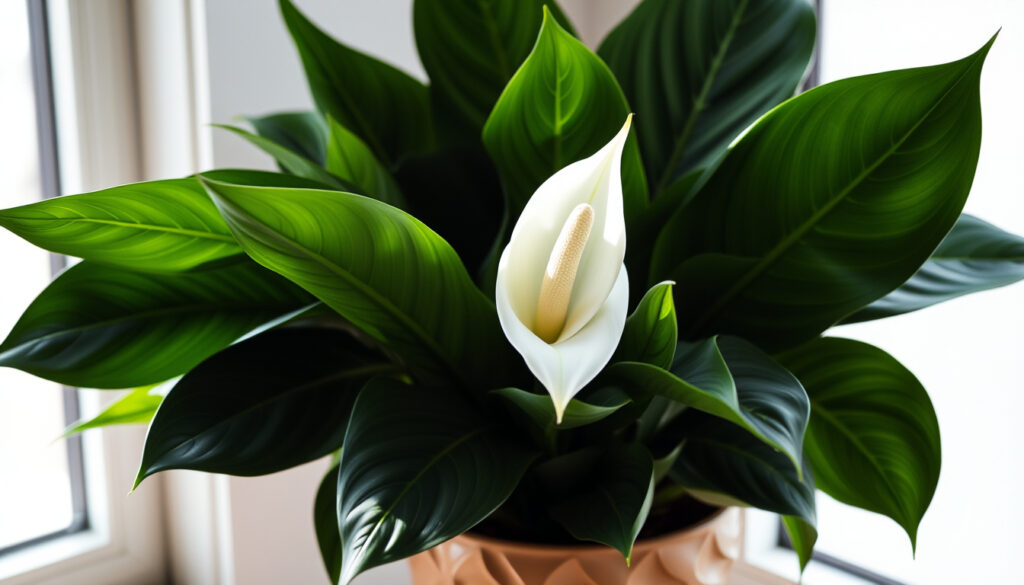
Peace Lily Care: Light, Watering & Common Problems
There’s a reason peace lilies (Spathiphyllum) are one of Ireland’s most popular houseplants: they’re forgiving, elegant, and thrive in the low-light conditions common in many Irish homes. But a few persistent myths — especially around toxicity and watering — can trip up even experienced owners. This guide cuts through the noise with evidence-based advice from the Royal Horticultural Society and the ASPCA, so you can keep your peace lily healthy and your household safe.
Scientific name: Spathiphyllum ·
Native to: Colombia and Venezuela ·
Light needs: Bright indirect light ·
Watering: When top inch of soil is dry ·
Toxicity: Mildly toxic to cats and dogs
Quick snapshot
- Contains calcium oxalate crystals causing irritation (ASPCA)
- Requires bright indirect light (IKEA Ireland)
- Prefers rainwater to tap water (Royal Horticultural Society)
- Exact effect on sleep quality beyond air purification
- Ideal propagation timing in Ireland’s climate
- Water when top inch of soil is dry (typically once a week)
- Fertilise monthly during spring and summer
- Repot every 2 years in fresh compost
- Monitor for brown tips and adjust watering/humidity
- Reduce watering in winter to prevent root rot
- Keep out of reach of pets and wash hands after handling
Eight key facts, one pattern: the peace lily is a low‑maintenance plant that rewards a few specific gestures — rainwater, bright indirect light, and careful watering — with year‑round green and white blooms.
| Attribute | Value |
|---|---|
| Botanical name | Spathiphyllum spp. (Wikipedia) |
| Plant family | Araceae |
| Mature height | 1–4 feet (30–120 cm) |
| Light requirement | Bright, indirect light |
| Water requirement | Moderate; keep soil evenly moist |
| Temperature range | 15–24°C (59–75°F) |
| Humidity | Moderate to high |
| Toxicity | Mildly toxic to cats and dogs (ASPCA) |
Where is the best place to put a peace lily?
Light requirements and window direction
- Peace lilies flourish in bright, indirect light — an east‑facing window is ideal (RHS YouTube).
- Direct strong light can scorch the leaves (IKEA Ireland).
- In summer, semi‑shade works; in winter, move it closer to a window (IKEA Ireland).
Temperature and humidity preferences
- Keep the plant in a room between 15–24°C (PlantStore.ie).
- Cold drafts and temperatures below 12°C can cause damage (Gardens4You.ie).
- Very dry air leads to leaf browning; misting or a tray of damp gravel helps (Royal Horticultural Society).
Is peace lily an indoor plant?
Yes. Peace lilies are tropical understory plants, so they are perfectly suited to indoor conditions. They can tolerate low light levels, though they may not flower as prolifically. In Ireland, they are almost always kept indoors because the outdoor climate is too cool and windy.
Irish homeowners who place their peace lily on an east‑facing windowsill and keep it away from radiators and draughty doors give it the best chance to thrive — and to bloom regularly.
The implication: light and temperature choice directly determines whether the peace lily will flower or just survive.
Bottom line: For best results in Irish homes, choose an east-facing windowsill away from drafts and direct heat sources. This simple placement delivers year-round blooms with minimal effort.
How should I take care of a peace lily?
Watering frequency and method
- Water when the top inch of the soil feels dry to the touch (Royal Horticultural Society).
- Use rainwater rather than tap water to avoid brown tips caused by chemicals (Royal Horticultural Society).
- Water thoroughly until it drains out the bottom, then empty the saucer (Gardens4You.ie).
Soil and fertilising schedule
- Use a well‑draining, peat‑based multipurpose compost (RHS YouTube).
- Apply a liquid fertiliser once a month from spring to autumn (RHS YouTube).
- Reduce or stop fertilising in winter when growth slows.
Pruning and cleaning leaves
- Remove yellow or brown leaves at the base with clean scissors.
- Wipe dust off leaves with a damp cloth to keep photosynthesis efficient.
- Cut off spent flowers (white spathes) at the stem to encourage new blooms.
A consistent watering and fertilising routine is the single biggest factor between a peace lily that drops its leaves and one that produces flowers all year. The RHS emphasises that overwatering (soggy soil) leads to root rot faster than underwatering, so always check the soil first.
What this means: establishing a weekly check habit prevents the two most common peace lily problems – root rot from overwatering and brown tips from poor water quality.
Bottom line: Irish owners should water only when the top inch of soil is dry, use rainwater, and apply liquid fertiliser monthly in spring and summer. This routine keeps the plant vigorous and blooming.
How often should a peace lily be watered?
Signs of overwatering vs underwatering
- Underwatered: leaves droop dramatically; a drink revives them within hours.
- Overwatered: leaves turn yellow and the soil stays wet; roots may rot.
- Check soil moisture before each watering — the top inch should be dry (Royal Horticultural Society).
Seasonal watering adjustments
- In summer, you may need to water once a week or more often if the room is warm.
- In winter, water less frequently — let the soil dry out a bit more between waterings (PlantStore.ie).
- Always use tepid water; cold water can shock the roots.
Bottom line: Peace lily watering is not a fixed schedule — it’s a response to the plant’s signals. For Irish households with central heating, weekly checks are usually enough. Drooping leaves mean “water me now”; yellowing leaves mean “hold off”.
The pattern: the peace lily gives clear visual cues – droop means thirst, yellow means overwatering – and paying attention to these signals beats any calendar-based routine.
What are the disadvantages of peace lilies?
Toxicity to pets and humans
- All parts contain insoluble calcium oxalate crystals, which cause oral irritation, drooling, vomiting, and difficulty swallowing (ASPCA).
- Mildly toxic to cats and dogs; severe reactions are rare but require veterinary attention.
- Skin contact can cause irritation in sensitive individuals — wash hands after handling.
Sensitivity to chemicals and water quality
- Tap water chemicals (chlorine, fluoride) often cause brown leaf tips (Royal Horticultural Society).
- Using rainwater or filtered water prevents this common issue.
Common pests and diseases
- Spider mites and scale insects can attack, especially in dry indoor air.
- Root rot from overwatering is the most common cause of death.
- Bacterial leaf spot can occur if water sits on leaves for long periods.
Peace lilies are not a “set and forget” plant. Their sensitivity to water quality and their toxicity to pets mean owners must be vigilant. For Irish pet owners, the ASPCA’s warning is clear: keep the plant out of reach, or choose a pet‑safe alternative.
The catch: the peace lily’s beauty and air-purifying benefits come with real responsibilities – toxicity to pets and sensitivity to tap water – that require active management rather than passive neglect.
Can I sleep with a peace lily in my room?
Air-purifying benefits and NASA study
- The NASA Clean Air Study found that peace lilies can remove benzene and formaldehyde from the air (Wikipedia).
- They are among the most effective houseplants for improving indoor air quality.
Safety considerations for bedrooms
- Peace lilies do not release significant CO₂ at night — they are safe for bedrooms.
- Place the plant on a high shelf or stand if you have pets that might chew it.
- Wash hands after any contact, especially before touching your face.
Does peace lily release CO₂ at night?
No. Like most plants, peace lilies carry out both photosynthesis and respiration, but the net effect is negligible. They continue to purify the air 24/7. The only bedroom risk is the toxicity issue for pets, not any respiratory concern for humans.
Bottom line: A peace lily is a fine bedroom companion for humans — it helps clean the air and adds humidity. But pet owners should either place it out of reach or choose a non‑toxic alternative. The trade‑off is between aesthetic and safety.
Six key specifications that define the peace lily’s care profile, drawn from the RHS and IKEA Ireland:
| Specification | Details |
|---|---|
| Light requirement | Bright indirect light (east‑facing window) |
| Watering method | When top inch dry; use rainwater |
| Soil type | Well‑draining, peat‑based multipurpose compost |
| Fertiliser | Liquid, monthly in growing season |
| Temperature range | 15–24°C |
| Humidity | Moderate to high; misting advised |
Pros and cons of peace lily
Upsides
- Thrives in low light, perfect for Irish interiors
- Known for air‑purifying qualities (NASA study)
- Low maintenance – forgiving of occasional neglect
- Beautiful white blooms for months
- Increases indoor humidity
Downsides
- Toxic to cats and dogs – requires careful placement
- Sensitive to tap water chemicals – brown tips likely
- Prone to root rot if overwatered
- Can attract spider mites in dry air
- May not flower without enough light
How to propagate a peace lily (step by step)
- Choose the right time: Spring or early summer, when the plant is actively growing.
- Remove the plant from its pot and gently separate a clump of leaves with roots attached.
- Pot the division into a container with fresh, well‑draining compost.
- Water thoroughly and place in bright indirect light. Keep the soil moist for the first few weeks.
- Wait for new growth – roots usually establish in 4–6 weeks.
Bottom line: Propagating a peace lily is straightforward, but success depends on timing and humidity. Irish gardeners should aim for late spring when the house is warm and daylight is increasing.
What we know for sure vs what remains unclear
Confirmed facts
- Peace lily contains calcium oxalate crystals – toxic to pets (ASPCA)
- Requires bright indirect light; direct sun burns leaves (IKEA Ireland)
- Rainwater is better than tap water (Royal Horticultural Society)
- Overwatering causes root rot (Royal Horticultural Society)
What’s unclear
- Exact effect on sleep quality beyond air purification
- Best propagation timing for Ireland’s variable climate
- Long‑term effects of low light on flowering frequency
“Clinical signs of peace lily exposure include oral irritation, intense burning and irritation of the mouth, drooling, vomiting, and difficulty swallowing.”
ASPCA Poison Control Center
“Peace lilies are among the most effective houseplants for removing benzene, formaldehyde, and other volatile organic compounds from indoor air.”
For Irish households, the peace lily offers a rare combination of beauty, low maintenance, and air purification. But the trade‑off is clear: pet owners must either place it out of reach or choose a non‑toxic plant. The watering and light requirements are straightforward once you understand the signals. For the average Irish plant lover, the peace lily is an excellent choice — provided you respect its mild toxicity and its preference for rainwater.
thehomesprouts.com, express.co.uk, aspca.org, almanac.com, thehomesprouts.com, fernandfeline.com
For a comprehensive overview of watering frequency and light needs, refer to this peace lily care guide tailored for Australian homes.
Frequently asked questions
What size pot is best for a peace lily?
Choose a pot 1–2 inches wider than the root ball. Peace lilies prefer being slightly root‑bound, so avoid oversized pots.
Why are peace lily leaves turning yellow?
Yellow leaves usually indicate overwatering or poor drainage. Check the soil moisture; if it’s soggy, let it dry out before watering again.
Can peace lily grow in water only?
Yes, they can be grown hydroponically. Place the roots in a jar of water with a little liquid fertiliser, and change the water weekly.
How to revive a drooping peace lily?
Give it a thorough drink. Drooping leaves are almost always a sign of underwatering. Within a few hours, the leaves should perk up.
How to clean peace lily leaves naturally?
Wipe with a damp cloth or give the plant a gentle shower. Avoid leaf‑shine products, which can clog the pores.
What fertilizer is best for peace lilies?
A balanced liquid houseplant fertiliser (e.g., 20‑20‑20) diluted to half strength, applied monthly during the growing season.
Related reading
More related posts
 Chris Appleton: Biography, Children, Divorce, and Cancer Scare
 Box Office Mojo – Reliable Guide to Film Revenue Data
 Shiloh Jolie-Pitt: Name Change, Gender Identity, and Latest News
 Alex Karp: Net Worth, Ethnicity, Politics, and Personal Life
 People Famous: Top Rankings, Gen Z Favorites & Historical Fame
 David Hasselhoff Wheelchair Photos – Airport Sightings Explained
 Malachi Barton: Age, Girlfriend, Movies, and TV Shows
 Vegas Matt Biography: Real Name, Net Worth, and Latest Updates
