Domestic Airport Sydney – Terminals, Transport and Parking Guide
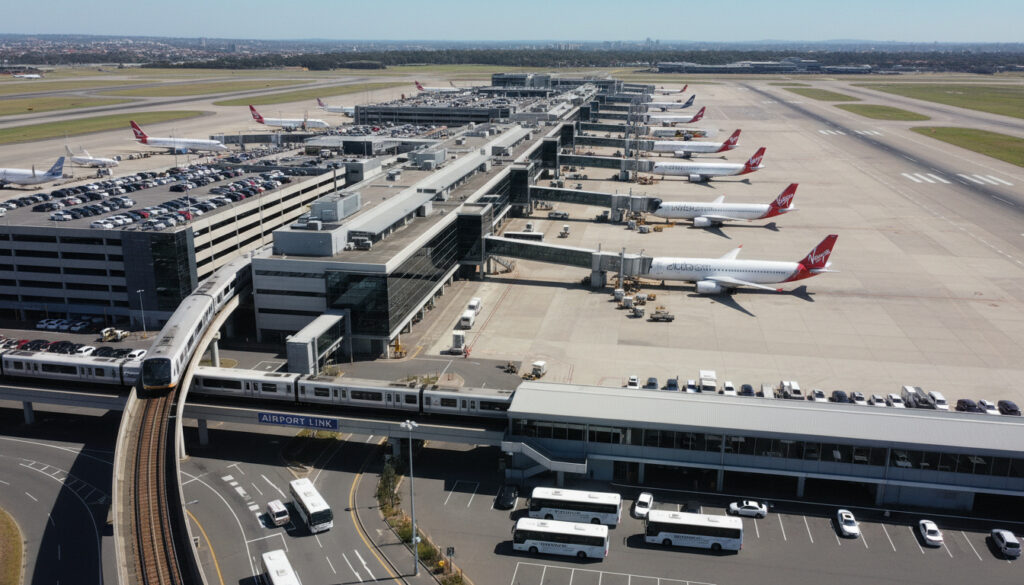
Sydney Kingsford Smith Airport serves as the primary gateway for domestic air travel in Australia’s largest city. Located in Mascot, approximately eight kilometres south of the central business district, the facility processes millions of passengers annually through two dedicated domestic terminals operating between 4:00am and 11:00pm.
The domestic operations split between Terminal 2 and Terminal 3 create distinct hubs for different carriers. Terminal 2 functions as a multi-airline facility, while Terminal 3 remains exclusively dedicated to Qantas and QantasLink services, requiring passengers to verify their departure point before arriving.
Recent infrastructure investments, including a $4.4 billion expansion program and ongoing check-in upgrades at T2, continue to reshape the passenger experience. Understanding the specific airline assignments, ground transport connections, and transfer procedures remains essential for navigating this busy aviation hub efficiently.
Which Terminal is Domestic at Sydney Airport?
All domestic flights at Sydney Airport operate exclusively from Terminal 2 and Terminal 3. T3 serves solely as the Qantas Domestic Terminal, while T2 accommodates Virgin Australia, Jetstar, Regional Express, and other domestic carriers.
Mascot, 8km south of Sydney CBD
T2 (Multi-carrier), T3 (Qantas only)
Sydney Airport Corporation
SYD (domestic operations)
Key Operational Insights
- T2 handles Virgin Australia, Jetstar, Rex, FlyPelican, Link Airways, and select Qantas flights numbered QF1600 and above.
- T3 exclusively processes Qantas and QantasLink flights in the QF400-QF1599 range.
- Both terminals operate from 4:00am to 11:00pm daily.
- Current security wait times average 0-5 minutes when screening points are open.
- A free T-Bus shuttle connects the two terminals for passengers needing to transfer.
- Check-in counters typically open two to three hours before scheduled departures.
| Fact | Details |
|---|---|
| Domestic Terminals | T2 (Multi-airline), T3 (Qantas dedicated) |
| Distance from CBD | 8-10 kilometres |
| Train Travel Time | Approximately 20 minutes |
| Operating Hours | 4:00am – 11:00pm daily |
| Security Processing | 0-5 minutes when open |
| Operator | Sydney Airport Corporation |
| General Contact | +61 2 9667 6111 |
| Primary Runway | 16/34 (3,700m) |
How to Get to Sydney Domestic Airport
By Train and Bus
The Airport Link train service connects both domestic terminals directly to the Sydney CBD in approximately 20 minutes, covering roughly 9-10 kilometres. Transport resources indicate the train stops at the T2 station first when travelling from the city, followed by the T3 station. Public buses and airport shuttles provide additional connectivity from various metropolitan locations.
Both T2 and T3 maintain dedicated train stations. Passengers should verify their terminal before boarding, as walking between the stations while possible requires exiting the paid area and re-entering, potentially incurring additional charges.
By Car, Taxi or Rideshare
Road access to the domestic precinct sits approximately 8-10 kilometres south of the CBD, typically requiring 15-25 minutes by car or taxi depending on traffic. Passenger drop-off zones sit adjacent to both terminal entrances, while multi-level parking facilities accommodate longer stays. Car rental services operate from within both terminal buildings.
From International Terminal (T1)
Travellers connecting from international flights must allow extra time when transferring to domestic departures. Webjet terminal guides confirm that the international T1 terminal sits separated from the domestic precinct by active runways, necessitating either a shuttle bus service or train connection. The Qantas and OneWorld shuttle operates every 10 minutes for eligible passengers.
Airlines and Flights from Sydney Domestic Terminal
Terminal 2 Operations
T2 functions as the primary hub for non-Qantas domestic carriers. Virgin Australia, Jetstar, Regional Express (Rex), FlyPelican, and Link Airways all maintain check-in counters and departure gates within this terminal. Qantas documentation confirms that select flights numbered QF1600 and above also depart from T2 facilities, creating a split operation for the national carrier.
Qantas uses T3 exclusively for flights numbered QF400 through QF1599. Higher numbered Qantas services and all other airlines operate from T2. Terminal assignments appear on booking confirmations and boarding passes.
Terminal 3: The Qantas Hub
T3 remains dedicated solely to Qantas and QantasLink operations. This terminal handles the majority of the airline’s Sydney domestic network, including high-frequency services to Melbourne and Brisbane. The facility features Qantas-specific check-in areas, lounges, and boarding gates designed around the carrier’s operational requirements.
Check-in and Security Timing
Check-in counters typically open two to three hours before scheduled departures, aligning with the airport’s operational window. Current flight data indicates security processing times average between zero and five minutes when screening points are active, though passengers should allow additional time during peak morning and evening periods.
Parking, Facilities and Terminal Transfers
Parking and Ground Transport
Both domestic terminals offer multi-level parking structures situated within walking distance of check-in halls. Passenger drop-off zones allow for immediate terminal access, while long-term parking options cater to extended trips. Detailed parking maps and real-time availability updates appear on the Sydney Airport website.
Shops, Dining and Services
Retail and dining options at T2 and T3 mirror the amenities found at the international terminal. Passengers find restaurants, cafes, ATMs, and car rental desks within both buildings. The specific mix of food outlets and retail stores varies between terminals, reflecting the different airline passenger demographics.
While T2 and T3 sit within walking distance of each other, transferring to the International Terminal (T1) requires additional transport. The runway separation makes walking impossible; passengers should allow extra time for the shuttle or train connection when transferring between domestic and international flights.
Moving Between Domestic Terminals
T2 and T3 connect via a covered walkway with directional signage guiding passengers between the two facilities. The walk takes approximately 5-10 minutes depending on baggage and mobility needs. A free T-Bus shuttle also circulates between the terminals for passengers preferring not to walk.
More related posts
 Bull Arab Dog – Size, Temperament, History and Care
 Andrew Garfield: Relationships, Religion, Age, Movies & Net Worth
 Jeremy Allen White: Divorce, Sobriety, Fatherhood Guide
 Skye Medical Centre: Armadale, Canning Vale Services
 Bert Newton: Death, Cause of Death, and Family Legacy
 Mads Mikkelsen: Biography, Smoking Rumor, and Most Famous Roles
 Dua Lipa Melbourne 2025: Rod Laver Arena Shows & Tickets
 Box Office Mojo – Reliable Guide to Film Revenue Data
