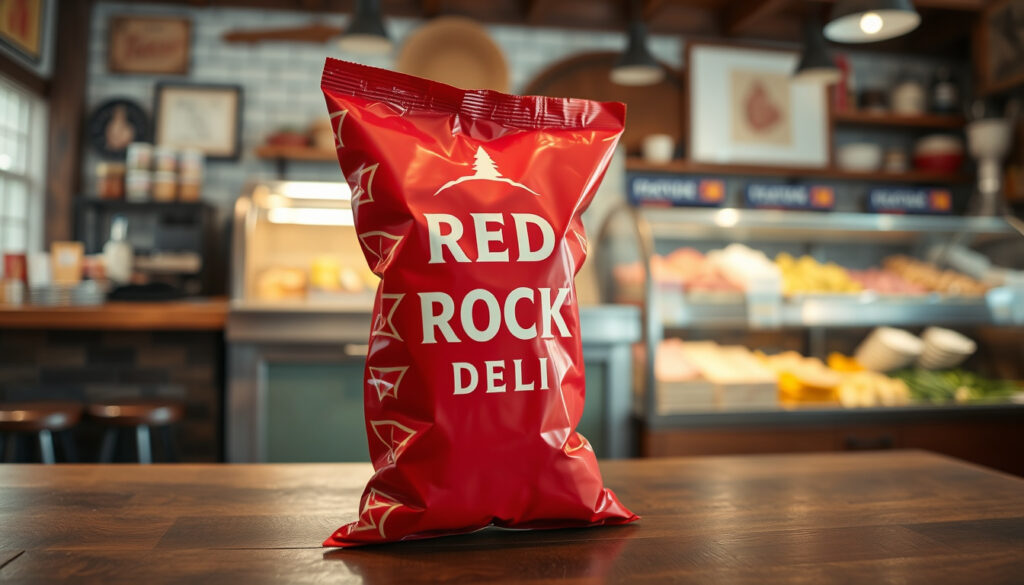
Red Rock Deli Chips: Origin, Ownership, and Where to Buy
You’ve probably spotted those dark bags with the deli-style logo on a supermarket shelf or during a late-night Amazon browse. The story behind them goes deeper than just “premium chips” — a tale of Australian roots, American ownership, and a global snack strategy that is quietly shaping where you can buy them.
Brand Origin: Australia ·
Owner: PepsiCo ·
Cooking Oil: 100% Australian-grown canola oil (transition from sunflower) ·
Key Markets: Australia, United Kingdom, United States (limited) ·
Known For: Rough-cut, slow-cooked premium potato chips
Quick snapshot
- Australian premium potato chip brand — Chips and Crisps, snack industry blog
- Owned by PepsiCo — Chips and Crisps
- Known for rough-cut, slow-cooked chips in canola oil — Red Rock Deli official Australian site
- Australia: Coles, Woolworths — Red Rock Deli official Australian site
- UK: Amazon.co.uk — Red Rock Deli official Australian site
- US: Amazon.com, The Australian Food Shop — Snack and Bakery, industry trade publication
- Online international shipping — Red Rock Deli official Australian site
- Sea Salt, BBQ, Salt & Vinegar, Sour Cream & Chive, Sweet Chilli & Sour Cream, Lime & Black Pepper, Thai Chilli & Lime — Red Rock Deli official Australian site
- Gluten-free, vegan options available — Red Rock Deli official Australian site
- Cooked in 100% Australian-grown canola oil — Red Rock Deli official Australian site
- Australia – widespread — Red Rock Deli official Australian site
- United Kingdom – online and select stores — Red Rock Deli official Australian site
- United States – limited online only — PepsiCo, global snack conglomerate
- India – digital-first launch in 2023 — PepsiCo, global snack conglomerate
- Other markets via import — Chips and Crisps, snack industry blog
Six key details, one pattern: the brand is Australian in origin but global in ambition, with distribution that varies widely by region.
| Label | Value |
|---|---|
| Brand Name | Red Rock Deli |
| Country of Origin | Australia |
| Owner | PepsiCo |
| Main Markets | Australia, United Kingdom, United States (online), India |
| Key Ingredients | Potatoes, canola oil, seasonings |
| Dietary Attributes | Gluten-free, vegan (most flavors), kosher (some) |
Where do Red Rock Deli chips come from?
The Australian roots of Red Rock Deli
- Created in 2002 by a group inspired by delis, working with master chefs — Chips and Crisps, snack industry blog
- Potatoes sourced directly from Australian farmers, sorted for quality — Chips and Crisps, snack industry blog
- Chips are roughly cut, slow cooked, seasoned while warm, and packed in foil — Chips and Crisps, snack industry blog
Red Rock Deli chips are unequivocally Australian. The brand’s creation story — a small team working with chefs to replicate deli-style chips — is a classic Australian food-startup narrative. The product philosophy is built around local sourcing: potatoes from Australian farms, cooked in sunflower or canola oil that is also domestically grown.
Ingredients sourced from Australia
| Ingredient | Source |
|---|---|
| Potatoes | Australian farms — Red Rock Deli official Australian website |
| Sunflower oil | Originally 100% Australian sunflower; now transitioning to canola — Red Rock Deli official Australian website |
| Canola oil | 100% Australian-grown, with antioxidants — Red Rock Deli official Australian website |
Due to sunflower oil supply issues, Red Rock Deli has switched some products to Australian-grown canola oil. Packaging may still list sunflower oil during the transition.
The implication: the brand’s “made in Australia” identity is genuine — every key ingredient comes from within the country. But the oil change shows that even premium brands adapt to global supply realities.
Which country brand is Red Rock Deli chips?
Why some consumers mistakenly think it is Indian
- PepsiCo launched Red Rock Deli in India in 2023 with a digital-first strategy — PepsiCo, global snack conglomerate
- Indian consumers may assume an Australian brand with Indian-focused flavours is local
The confusion stems from PepsiCo’s aggressive push into emerging markets. Red Rock Deli’s India launch was widely covered in Indian media, leading some to assume the brand itself was Indian. It is not.
Official brand nationality
- Red Rock Deli is unequivocally an Australian brand — Red Rock Deli official Australian website
- It is not an Indian brand, despite digital-first launch strategies in India
- PepsiCo owns the brand and distributes it globally — Chips and Crisps, snack industry blog
Why this matters: a brand’s nationality can influence consumer trust. Red Rock Deli benefits from Australia’s clean, green image, even if the parent company is American.
Who owns Red Rock Deli chips?
PepsiCo’s snack portfolio
- Red Rock Deli is a PepsiCo range under the Smith’s Snackfood Company banner in Australia — Chips and Crisps, snack industry blog
- In the US, it is distributed by Frito-Lay North America — PepsiCo, global snack conglomerate
- PepsiCo also owns Bluebird Foods, which imports Red Rock Deli to New Zealand — Wikipedia
Acquisition and brand history
- Red Rock Deli was created in 2002 as an independent brand — Chips and Crisps, snack industry blog
- PepsiCo acquired the brand at some point; the exact acquisition date is not widely publicized
- It operates as a premium tier within PepsiCo’s global snack division
The catch: PepsiCo’s ownership is strategically underplayed in Australia, where national pride in local brands is strong. The packaging emphasises “Australian” and “deli” imagery, not the corporate parent.
Where are Red Rock Deli chips sold?
Retail presence in Australia
- Major supermarkets: Coles, Woolworths
- Also available at independent grocers and convenience stores
For those shopping at Coles, you can find Red Rock Deli chips at Coles Coburg North and Coles Margaret River, two locations where the full range is typically stocked.
International markets: UK, US, and beyond
- United Kingdom: sold via Amazon.co.uk and select retailers
- United States: launched in April 2018 with national distribution through Frito-Lay — Snack and Bakery, industry trade publication
- New Zealand: imported by Bluebird Foods, a PepsiCo company — Wikipedia
Online purchase options
- Amazon.com (US) and Amazon.co.uk (UK) are the primary online channels
- The Australian Food Shop ships internationally
- PepsiCo’s e-commerce partnerships allow direct ordering in some regions
What this means: availability is fragmented. Australians enjoy ubiquitous shelf space, while Americans must hunt online. The brand’s international expansion has been cautious, focusing on e-commerce over brick-and-mortar.
Does America have Red Rock Deli chips?
Current US distribution status
- Red Rock Deli debuted in the US in spring 2018 via Frito-Lay North America — PepsiCo, global snack conglomerate
- US launch flavours were Red Curry and Coconut, Himalayan Pink Salt and Lime, and Cracked Pepper — PepsiCo, global snack conglomerate
- US pricing: $1.99 for 2 oz bags, $4.29 for 7 oz bags — Snack and Bakery, industry trade publication
- US version is Non-GMO Project verified, with no artificial colours or flavours — Snack and Bakery, industry trade publication
How to buy in the United States
- Amazon.com is the most reliable online retailer
- The Australian Food Shop stocks a wider variety
- Limited brick-and-mortar presence; not in most mainstream grocery chains
The trade-off: Americans can get Red Rock Deli chips, but it takes effort. The brand’s premium pricing and niche flavours make it a specialty item, not a mainstream competitor to Lay’s or Kettle.
Clarity
Confirmed facts
- Red Rock Deli is an Australian brand owned by PepsiCo — Red Rock Deli official Australian site.
- Chips are cooked in 100% Australian-grown canola oil (transitioning from sunflower) — Red Rock Deli official Australian site.
- Available in Australia, UK, and US via online channels — Snack and Bakery, industry trade publication.
- US launch occurred in April 2018 with national distribution — PepsiCo, global snack conglomerate.
What’s unclear
- Exact year the brand was founded is not widely publicized.
- Specific details of the PepsiCo acquisition date are not readily available from official sources.
Red Rock Deli has a better quality of flavours.
Reddit user, r/AskAnAustralian, comparing Kettle and Red Rock Deli chips
We use only the finest quality ingredients in our range of Potato Chips, Crackers, Dips & Nuts.
Red Rock Deli official website
Frequently asked questions
Are Red Rock Deli chips gluten-free?
Yes, most Red Rock Deli chips are gluten-free. The brand states that its potato chips are made without gluten-containing ingredients, but always check the label as flavours can vary.
Are Red Rock Deli chips vegan?
Many flavours are vegan, including Sea Salt, Salt & Vinegar, and Sweet Chilli & Sour Cream. However, some flavours contain dairy (e.g., Sour Cream & Chive). Check the ingredients list.
What are the most popular flavors of Red Rock Deli chips?
In Australia, Sea Salt, BBQ, and Salt & Vinegar are top sellers. Internationally, the Lime & Black Pepper and Thai Chilli & Lime varieties are frequently mentioned in reviews.
How many calories in a serving of Red Rock Deli chips?
A typical serving of 28g (1 oz) contains around 150–160 calories, depending on the flavour. The 2 oz bag sold in the US contains about 300 calories.
Do Red Rock Deli chips contain MSG?
No, Red Rock Deli chips do not contain added MSG. The brand emphasizes natural flavours and clean ingredients.
Where can I buy Red Rock Deli chips in bulk?
In Australia, bulk purchases can be made at Coles and Woolworths. In the US, Amazon.com and The Australian Food Shop offer multi-packs.
Are Red Rock Deli chips suitable for a keto diet?
They are not keto-friendly due to carbohydrate content. A 28g serving contains about 15g of carbs, mostly from potatoes.
What is the shelf life of Red Rock Deli chips?
Typically 3–6 months from manufacture, depending on the packaging. The foil bags help preserve freshness.
For the average Australian shopping at Coles or Woolworths, the choice is clear: Red Rock Deli is a reliable premium option, produced domestically with local ingredients. For a PepsiCo executive, the brand serves as a global vehicle for gourmet positioning in markets like India and the UK. For the American consumer, the implication is equally direct: buy online, or wait for a broader brick-and-mortar rollout that may never come.
More related posts
 Harold Shipman: Verified Facts, Victims, and Gaps
 Ross Duffer: Biography, Age, Net Worth, and Key Facts
 Blood Types: Rarest and Most Common in Ireland
 Why Leslie Bibb Won’t Marry Sam Rockwell
 Becca Bloom: Bio, Wealth, Husband, and Family Background
 Troian Bellisario: Ethnicity, Kids, Mental Health
 Officeworks Caroline Springs: Address, Hours, Phone & Services
 Ethan Slater: Ariana Grande Relationship, Career & Biography
