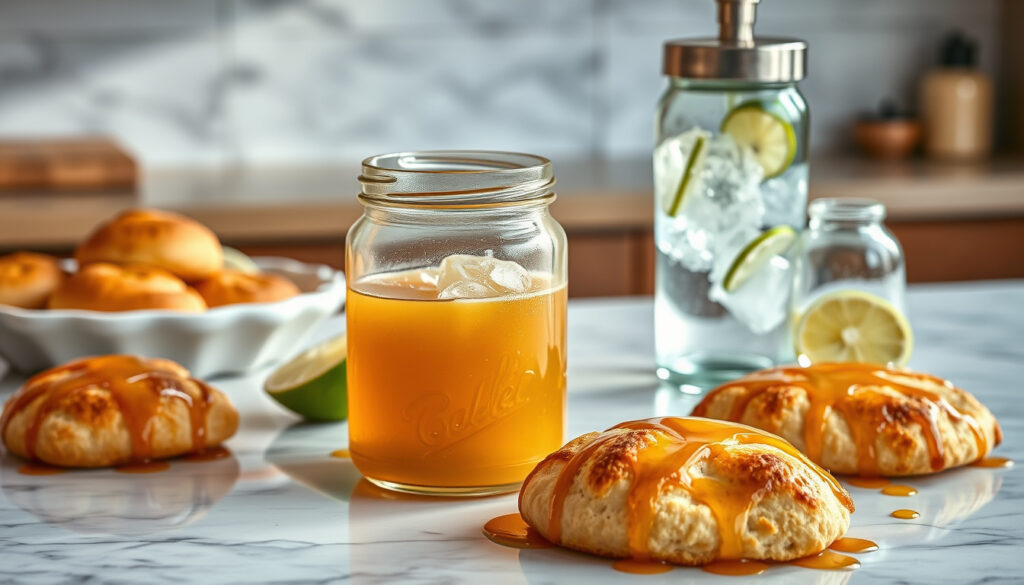
Sugar Syrup Recipe – Perfect for Cocktails and Baking
The technique dates back centuries in cocktail culture, where bartenders discovered that dissolving sugar in water created a more elegant drinking experience than serving sugar cubes or raw sweetener. Today, home cooks and professionals alike rely on this versatile preparation for everything from refreshing lemonades to elaborate pastry glazes. Understanding the fundamentals unlocks a world of possibilities in both hot and cold preparations.
How Do You Make Sugar Syrup?
Creating simple syrup involves dissolving sugar completely in water, producing a clear, pourable liquid sweetener. The standard approach requires only equal parts sugar and water measured by volume, though variations in ratio dramatically affect the final product’s consistency and sweetness intensity. Three primary methods exist for achieving dissolution: stovetop heating, microwave preparation, and a no-heat technique relying on agitation.
Overview
Key Insights
- Heat accelerates dissolution but the no-heat method preserves perfect clarity once settled
- Rich syrup at 2:1 ratio delivers more sweetness without diluting cold beverages
- Brown sugar introduces molasses notes that complement bourbon and coffee drinks
- Filter water when possible to prevent off-flavors from impurities
- Avoid boiling, which concentrates the mixture and risks caramelization
- Add flavor extracts or infusions only after the syrup cools below 40°C
- Volume measurements work reliably because ratios remain constant when scaled
Quick Reference
| Aspect | Detail | Notes |
|---|---|---|
| Standard Ratio | 1:1 sugar:water | Equal parts by volume |
| Rich Ratio | 2:1 sugar:water | Doubles sweetness concentration |
| Stovetop Time | 3–5 minutes | Medium-low heat, no boiling |
| Microwave Time | 60 seconds + 30s bursts | Stir between intervals |
| No-Heat Time | 3–5 minutes shaking | May appear cloudy initially |
| Best Sugars | White, Demerara, Turbinado | Avoid powdered sugar |
What Ingredients and Ratios Work Best?
The foundation of any sugar syrup begins with choosing the right sweetener and understanding how concentration affects the final product. White granulated sugar dissolves cleanly and produces a neutral-flavored base suitable for most applications. Alternative sugars introduce distinct characteristics that may enhance specific recipes.
Understanding Sugar-to-Water Ratios
The 1:1 ratio creates what professionals call standard simple syrup, yielding a thin, pourable liquid that blends seamlessly into drinks without altering their texture significantly. This formulation works optimally in most cocktails and everyday beverage preparation. According to Bright Eyed Baker, this ratio delivers the most versatile results across beverage categories.
The 2:1 ratio produces rich simple syrup with approximately twice the sweetness concentration, creating a thicker consistency reminiscent of light honey. This concentrated version proves particularly valuable in cold drinks where additional liquid would dilute flavors, such as espresso martinis or frozen cocktails. As noted by Moody Mixologist, the richer formulation holds up exceptionally well in ice-filled beverages without watering down the final drink.
Brown Sugar Variations
Brown sugar introduces molasses into the syrup, lending warm caramel and toffee undertones that pair exceptionally well with bourbon, coffee, and chocolate-based drinks. Light brown sugar provides subtle complexity, while dark brown sugar delivers deeper, more pronounced notes. The process remains identical to white sugar syrup, though the final product may exhibit a slight amber tint.
For vanilla-infused simple syrup, add ½ to 1 teaspoon of pure vanilla extract after the syrup cools completely. Adding extract while hot causes flavor compounds to evaporate, diminishing the final taste.
Specialty Sugar Options
Demerara and turbinado sugars produce syrups with rustic, natural molasses flavors reminiscent of raw cane sugar. These unrefined options work beautifully in whiskey cocktails and dark spirit preparations. According to discussions among bartenders on Straight Bourbon community forums, these sugars dissolve readily using the no-heat shaking method.
How Long Does Sugar Syrup Last and How to Store It?
Proper storage significantly impacts how long sugar syrup remains usable and safe for consumption. When prepared correctly and stored appropriately, simple syrup maintains quality for weeks in the refrigerator. Several factors influence actual shelf life, including preparation method, ingredient purity, and storage conditions.
Refrigerator Storage Guidelines
Standard 1:1 simple syrup keeps reliably for up to two weeks when refrigerated in an airtight container, according to Sugar and Soul. Some sources report successful storage for up to one month when the syrup contains no added ingredients like cream or fruit. Always use clean, dry utensils when dispensing to prevent contamination that accelerates spoilage.
Extended Storage Options
Freezing simple syrup in ice cube trays provides convenient portion control and extends usability for several months. These frozen cubes thaw quickly for immediate use and eliminate concerns about expiration dates. Moody Mixologist recommends this approach for those who prefer preparing large batches for regular use.
Discard any syrup that develops mold, an off smell, unusual texture, or visible cloudiness that wasn’t present when freshly made. When in doubt, throw it out rather than risk foodborne illness.
What Is Sugar Syrup Used For?
Sugar syrup appears across culinary applications ranging from professional cocktail service to home baking projects. Its liquid form ensures even distribution throughout beverages and batters, eliminating the risk of gritty sugar pockets or uneven sweetness. Understanding these applications helps determine which ratio best suits specific needs.
Cocktail Applications
Classic cocktails like the Old Fashioned, Daiquiri, and Mojito traditionally relied on simple syrup to deliver sweetness without disrupting the drink’s texture. The 2:1 rich ratio proves particularly valuable in drinks served over significant amounts of ice, where dilution from melting ice cubes already contributes additional liquid. Brown sugar simple syrup adds pleasing caramel notes to bourbon-based drinks, enhancing depth without overwhelming the spirit’s character.
Baking and Dessert Uses
Pastry chefs incorporate simple syrup for glazing cakes, moistening sponge layers, and flavoring frostings. The 2:1 ratio closely mimics caramel in consistency and sweetness, making it ideal for creating candy-like glazes on pastries and cookies. Cake decorators use thin simple syrup to brush on layers before assembling, ensuring each slice remains tender and evenly sweet.
Beverage Preparation
Coffee shops routinely use simple syrup for customizing drink sweetness, particularly in iced beverages where stirring is limited. The technique scales easily to create flavored varieties: vanilla syrup, hazelnut syrup, or lavender-infused versions all start with a simple syrup base. Lemonade, iced tea, and homemade sodas benefit similarly from this easily incorporated sweetener.
To prevent crystallization, ensure sugar dissolves completely before removing from heat, store in airtight containers to prevent air exposure, and consider adding a small pinch of corn syrup or glycerin for long-term stability.
The Step-by-Step Process
Understanding the sequence of actions helps achieve consistent results every time. Each step builds upon the previous one, creating a foolproof workflow suitable for scaling from small batches to larger productions.
- Combine ingredients — Measure equal parts sugar and water into your chosen vessel, whether saucepan, microwave-safe container, or sealed jar.
- Apply method — Heat gently on stovetop for 3–5 minutes, microwave in intervals totaling 60–90 seconds, or shake vigorously for 3–5 minutes without heat.
- Verify dissolution — Check that no sugar crystals remain visible and the liquid appears completely clear when held to light.
- Cool properly — Allow to reach room temperature before refrigerating to prevent condensation dilution inside sealed containers.
- Store appropriately — Transfer to clean glass jar or bottle, label with date, and refrigerate immediately.
What Works and What Remains Uncertain
| Established Information | Information That Remains Unclear |
|---|---|
| 1:1 ratio produces consistent, thin syrup | Exact shelf life varies significantly by contamination exposure |
| Heat methods dissolve sugar faster than no-heat | Optimal storage temperature beyond refrigerator |
| Brown sugar adds molasses flavor notes | Precise impact of different water types on final flavor |
| Crystallization prevents with airtight storage | Long-term quality degradation timeline |
| No-heat method works reliably with agitation | Ideal shelf life for flavored variations |
The Science Behind Simple Syrup
Sugar molecules possess remarkable solubility in water, capable of dissolving to create supersaturated solutions under the right conditions. When sugar and water combine, molecular attraction pulls sugar crystals apart, distributing sweetness evenly throughout the liquid. Temperature significantly influences this process: warmer water molecules move faster and break molecular bonds more efficiently, reducing dissolution time substantially.
The no-heat method relies entirely on agitation to accelerate natural dissolution. Shaking or stirring increases contact between sugar crystals and water molecules, gradually overcoming the crystalline structure holding sugar molecules together. According to Bright Eyed Baker, the syrup may appear slightly cloudy immediately after mixing but clears completely as sugar fully dissolves over several minutes of resting.
Expert Perspectives on Sugar Syrup
The ratio between sugar and water fundamentally determines the syrup’s character. A 2:1 rich simple syrup offers nearly double the sweetness without the dilution problems that plague standard cocktails served over ice.
— Moody Mixologist, Brown Sugar Simple Syrup Guide
Making simple syrup ahead of time transforms cocktail preparation from a rushed affair into an organized flow. A well-stocked bar refrigerator with pre-made syrups allows bartenders to focus on drink quality rather than prep work.
— Straight Bourbon Community Discussion, Simple Syrup Recipe Discussion
Summary
Sugar syrup represents one of the most versatile preparations in any kitchen or bar, requiring only sugar and water to create a liquid sweetener that outperforms granulated sugar across countless applications. The standard 1:1 ratio provides everyday utility, while the rich 2:1 formulation suits specialized needs in cocktails and baking. Multiple preparation methods accommodate different kitchen setups and time constraints, from quick microwave batches to hands-off no-heat preparations. Storage in sealed containers extends usability to weeks or months, making advance preparation entirely practical. Understanding ratios, methods, and basic troubleshooting transforms this humble preparation into a reliable staple that elevates everything from morning coffee to evening cocktails.
Frequently Asked Questions
Why won’t sugar dissolve in my syrup?
Insufficient heat or agitation causes incomplete dissolution. Ensure you’re using medium-low heat for 3–5 minutes, or shake vigorously for 3–5 minutes at room temperature. Also verify your measurements are accurate by volume rather than weight.
How long does sugar syrup last in the refrigerator?
Standard simple syrup lasts approximately two weeks refrigerated in an airtight container. Some sources report successful use up to one month. Always check for mold or off-odors before using.
Can I make simple syrup without any heat?
Yes, the no-heat method works by combining room-temperature water with sugar in a sealed jar and shaking vigorously for 3–5 minutes. The mixture may appear cloudy initially but clears as sugar fully dissolves.
What is the difference between 1:1 and 2:1 sugar syrup?
1:1 contains equal parts sugar and water, creating a thin, pourable syrup ideal for most uses. 2:1 contains twice as much sugar relative to water, producing a thicker, sweeter syrup that resists dilution better in cold drinks.
Is sugar syrup the same as simple syrup?
Yes, these terms are interchangeable. Both refer to sugar dissolved in water, with “simple syrup” being the standard culinary and cocktail industry terminology.
How do I prevent sugar syrup from crystallizing?
Prevent crystallization by dissolving sugar completely before removing from heat, storing in airtight containers to prevent air exposure, and optionally adding a tiny pinch of corn syrup or glycerin for added stability.
Can I use brown sugar instead of white for simple syrup?
Absolutely. Brown sugar produces syrup with molasses flavor notes, adding caramel and toffee characteristics. Light brown sugar offers subtle complexity while dark brown sugar delivers deeper, richer flavor suitable for bourbon cocktails and coffee drinks.
More related posts
 Mark Butler: Minister for Health & Aged Care, Biography
 ADHD in Women: Signs, Symptoms & Treatment Guide
 People Famous: Top Rankings, Gen Z Favorites & Historical Fame
 Karen Fukuhara: Biography, The Boys Role, and Ethnicity
 Waterproof Jacket Guide: Best Picks for Ireland 2025
 Aaron Carter Death: Cause, Family Feud & Estate
 Peace Lily Care: Light, Watering & Common Problems
 152 cm in Feet & Inches: Converter + Height Guide
